For Dancers and Choreographers
Turn what you already know into a skill that makes you seen.
Capturing The Moving Body is your dance film course for building the skills and concepts to translate your choreography on screen, without more “generic film tutorials” that are not made for dancers.
- 70+ Dancers Taught
- Monthly Live Q & A Through 2026
- Instant Access to Full Course
- One-Time Investment, Lifetime Access
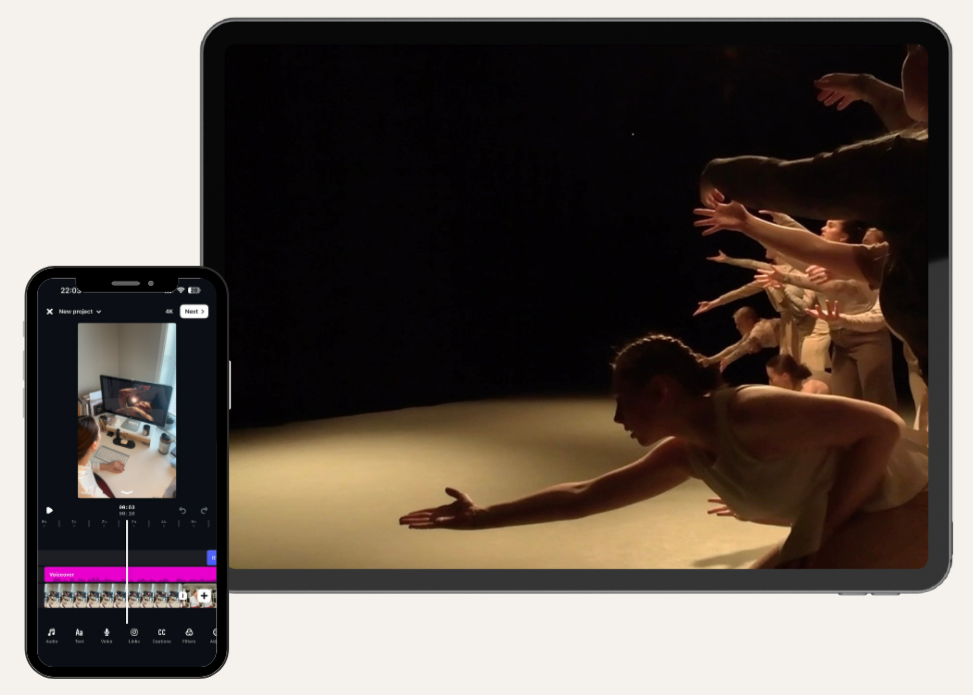
You’ve been dancing forever.
But you still haven’t figured out
the skill that makes you seen as a dancer.
You've trained your whole life for this. You've performed on stage. You're making your own work.
But your experience isn’t the problem.
The problem is: you haven’t turned what you already know into the skill of actually knowing how to film.
Here’s what’s actually happening:
- You go to class, workshops, intensives, auditions, doing everything you’re told to do. But deep down you know your footage doesn’t represent you, and it’s costing you real work opportunities.
- You’ve been too scared to even pick up the camera, stuck in analysis paralysis for months (maybe years), because every attempt just ends in disappointment.
- You have a camera roll full of clips you’re too embarrassed to share, because you don’t think they reflect you as a dancer.
- You’re piecing together advice from YouTube tutorials, different filmmaking tips, Instagram advice, and you can’t figure out why none of it is working for you.
- You keep looking for external fixes, like upgrading your gear or downloading another editing app, instead of learning the actual skill that will improve your footage.
- You’re waiting for the right moment, permission to start, or to finally feel ready. But you’ve been putting this off for months, if not years.
Here’s the truth: The dancers with better footage aren’t the most naturally talented ones. They’re the ones who got tired of their footage not doing their choreography justice, and learned the skill themselves.
That’s what Capturing The Moving Body teaches you to do.
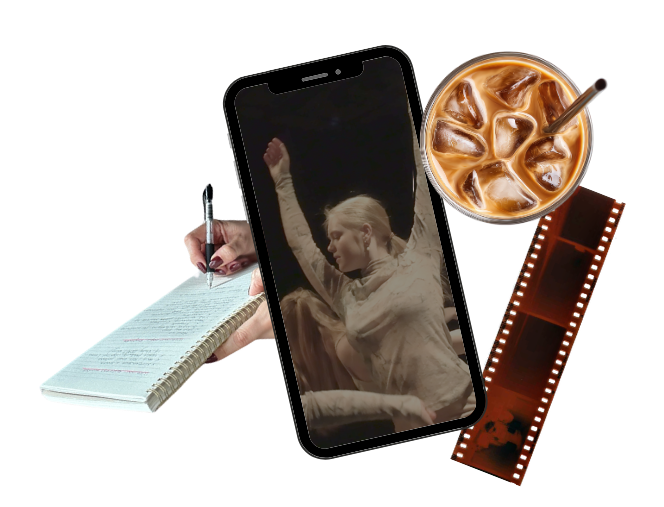
Stop Waiting. Start Capturing.
Capturing The Moving Body gives you everything you need to start filming dance in one place.
What's Inside
Capturing The Moving Body
The Bridge: Dance + Camera
Understand why your dance looks different on camera than on stage, and start seeing your camera as a creative collaborator rather than an outside, static observer.
The Roadmap: From Idea to Film
Turn a concept into a real shoot plan: location, lighting, costume, and sound decisions made on purpose to support your story before you go out to shoot.
The Storytelling Tool
Make the creative choices when it comes to your camera settings that help tell your story, not just technical settings to get right.
The Shoot Day Essentials
Everything you need for a successful shoot, from your checklist to camera settings, with every shot planned in sync with your choreography, whether filming solo or with someone else.
The Edit: The Eye of a Choreographer
Edit your footage using the same eye you already used to build choreography.
Beyond the Stage
Get your finished film ready to publish and start building your portfolio.
What You Get When You Join
Capturing The Moving Body
This isn’t a course you watch once and forget. This is the toolbox you’ll come back to for the rest of your dance career.

All 6 Signature Steps
The entire course is yours from day one. No weekly drips. All 6 modules from idea to finished dance film.
Self-Paced, Lifetime Access
Learn at your own pace. Keep the templates and checklists forever, and get every future update included.
Monthly Live Q & A Through 2026
Got a question? Stuck on something specific? Every month, you can drop your questions in our private channel, and Hennie will answer every single one, so you get monthly support when you need it.
Here’s What Becomes Possible When You Join
Before Capturing The Moving Body
- Piecing together advice from YouTube and Instagram tutorials, and wondering why none of it works for dance.
- Convinced that filming isn't for dancers, too advanced, too technical, and intimidated by cameras you don't know how to use.
- Feeling intimidated by cameras because you don’t understand how they work.
- Constantly thinking that buying more expensive camera gear will solve your problem.
- Feeling behind when you see other dancers with better dance footage, which makes you spiral or feel embarrassed.
- Doubting your own dancing or choreography because it doesn’t come across on screen the way you pictured it.
After Capturing The Moving Body
- One cohesive course, where everything you need to get started is in one place, made for dance, and spoken in a language you already understand.
- Realizing that filming is for dancers, and that you belong behind the camera, given your valuable background as a dancer.
- Co-creating with a camera doesn't scare you anymore because you now understand how to work with one.
- Realizing that upgrading your gear won't solve your footage issues. It's about learning to use the camera you already have from your dancer's point of view.
- You understand how movement transforms through a lens. You know how to approach the camera differently from the stage, and that shift changes everything about how your choreography lands on screen.
- You start trusting your intuition and believing that your ideas actually matter. Your dancing and choreography finally come across on screen the way you pictured them.
If this sounds like you, you're not alone.
And you're not far from the clarity and confidence you've been craving behind the camera.
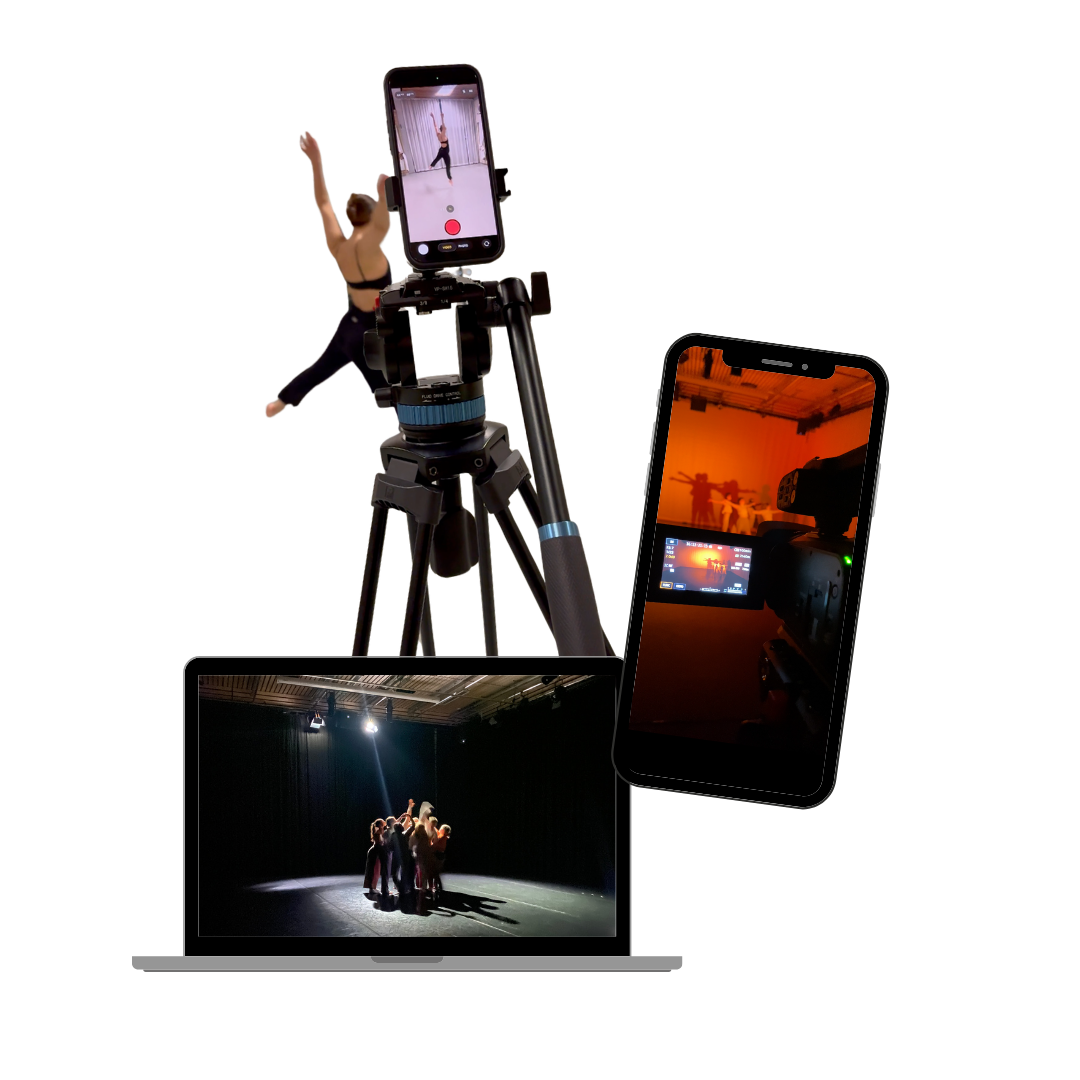
The Result
- Your First Dance Film
- A Lifelong Career Skill
- From Creative Block to Freedom
- Ownership Behind the Camera
Is Capturing The Moving Body Right For You?
This course is specifically designed for dancers and choreographers who want to master the skill of filming dance.
This Is for You If
- You're a dancer or choreographer who's filmed SOME (even if it's inconsistent), but you know there's a better way you haven't found yet.
- You know you're a good dancer and choreographer. You just can't figure out how to get your artistry to translate on screen.
- You're tired of everyone telling you “just document your work”, but no one in your education ever showed you how.
- You know you should be documenting your work, but you have no idea WHAT it means or HOW to do it.
- You're willing to look at your actual dance footage, even if it's humbling, because you can't change what you won't face.
- You want someone to show you the structure to build an idea into an onscreen concept, plan it, and execute it, instead of another generic filmmaking framework.
- You're pursuing a serious dance career, not as a hobby, not just to see, but because you're committed to building the skill of filming dance.
This Is Not for You If
- If you're looking for an all-done-for-you program where you don't have to put in the work, then this program is not for you.
- You're still in the "maybe I'll pursue my dance career someday" phase. This is for people who are seriously committed and ready to be seen.
- If you need 1:1 live coaching through every decision instead of learning to trust yourself and your instincts.
- If you're not willing to commit to the work, invest in your dance career, and implement the tasks and exercises, then this isn't the best season for this course.
- If you're not open to feeling exposed sometimes when you see yourself on camera, this isn't for you.
- This isn't a course on quick TikTok or Instagram content tips. It's for dancers who want to make real, cinematic dance films.
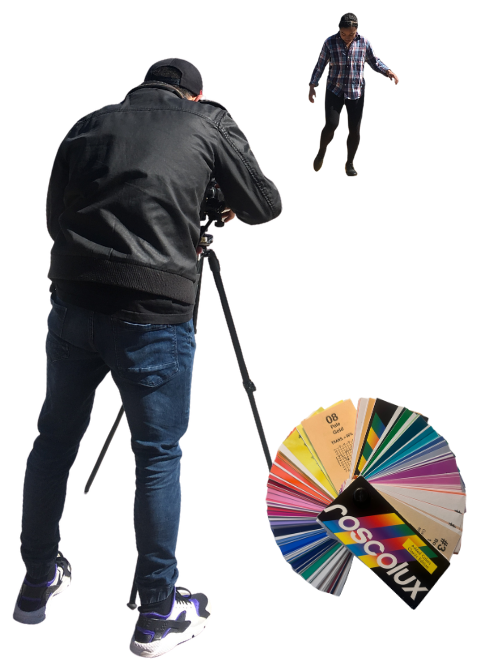
The belief that filmmaking isn’t for you only exists because nobody told you about the advantage you already have. I built this course to change that.
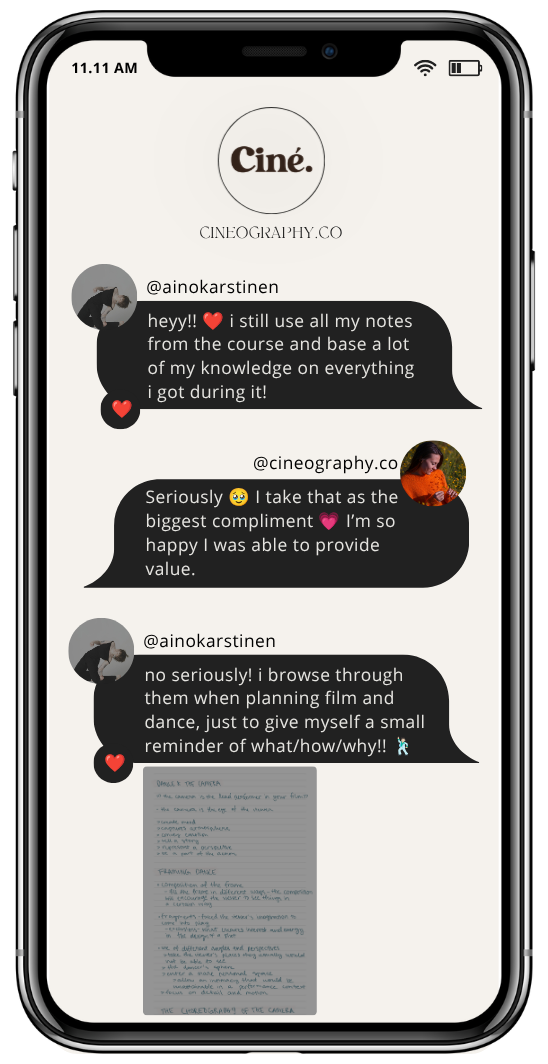
What Dancers Are Saying
I believed the craft of film was too advanced, too intricate. Something I didn't think could be accessible to me. With the foundation Henrikke gave me, I was able to advance in a field I never imagined entering. Since the course, I've created two dance films. One won an award at Dansens dager Film Festival. Both got me accepted to a Master's in filmmaking at EICAR in Paris, and they've given me something physical to tie my artistry to ever since.
Before this course, I was convinced I needed advanced gear and technical knowledge I didn't have. What surprised me most was understanding what dance film can do that live performance can't. It lets the audience get close to the dancer in a way a stage never could. I didn't expect that to hit as hard as it did.
This course opened up a completely new way of thinking about movement and choreography. Coming from a stage background, it was fascinating to explore how dance can be shaped and transformed through the lens of a camera. I gained practical skills in filming, editing, and composing for the screen, and learned how to work with space, framing, and perspective in a way that supports the choreography. This course has given me new tools for artistic expression and expanded my understanding of what dance can be beyond the stage.
Three years later, I still go back to my notes from this course. It gave me the confidence to trust my own eye, and the dance film I made is still part of my portfolio today. Straightforward, no bullshit, just packed with knowledge that actually sticks. Videography has been part of my work ever since, and the foundation I needed all started with this course.
The gap I didn't know existed
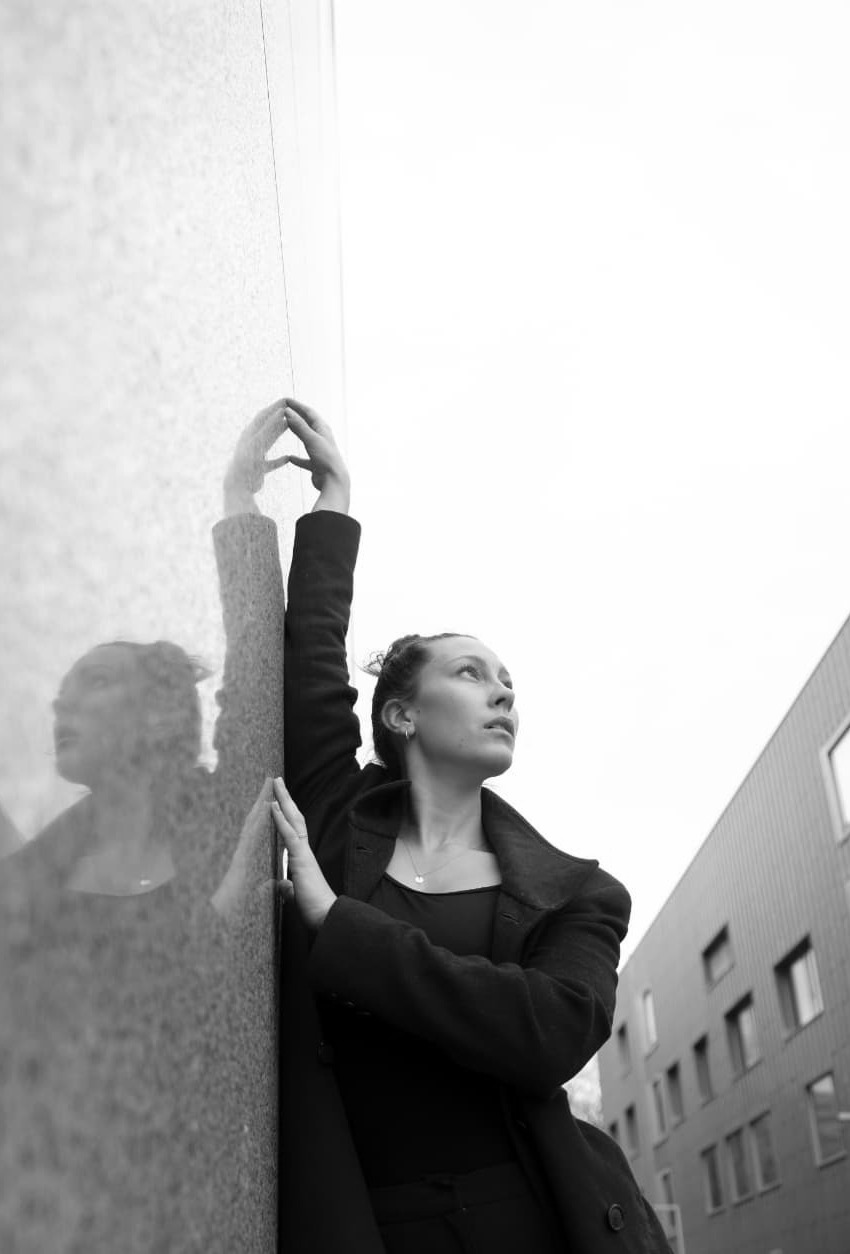
I founded Cinéography because of a gap that changed how I saw dance altogether.
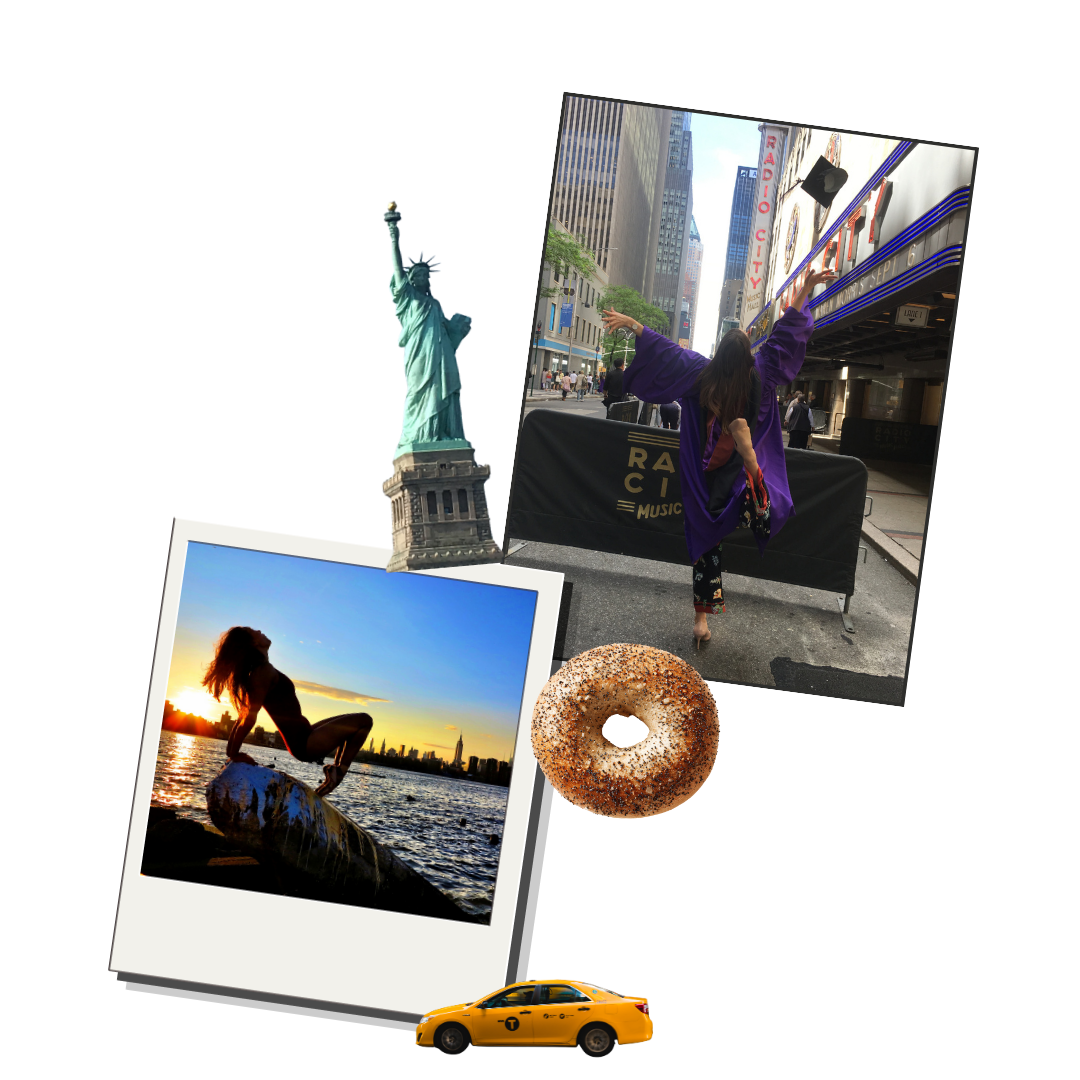
At 26, I moved to New York to study dance filmmaking. I was accepted into Tisch School of the Arts to pursue my MFA in Dance & Technology.
It was here that I discovered a gap in our education, we work in a visual industry where we need to be seen, yet we're never taught how to film dance.
I fell in love with dance film because I realized that my background as a dancer was an advantage behind the camera. It led me to expand my artistry in a new way, and I found a new kind of ownership over how my work was seen, a sense of creative ownership I'd never felt before. My films went on to screen at festivals across four continents, from Lisbon to Vietnam to Mexico City, and win awards at Short Film Factory, Greensboro Dance Film Festival, and FilmArte Festival Berlin.
After I graduated, I felt grateful to have found that gap, but I also knew I wanted to make it more accessible to other dancers, because so many of us feel overwhelmed, even petrified, at the thought of filming our own work.
Since 2020, I've been teaching this skill to dancers in higher education. It became clear that this gap wasn't something only I experienced, our whole industry does. We depend on being seen to get job opportunities, yet we're rarely given the tools or training to meet that demand.
Cinéography was created to help solve this problem
We bridge the gap between dance and film with training built specifically for dancers. Through programming tailored to how choreography translates on screen, we help dancers own their footage, get seen for their work, and build the skills that run their dance careers.
Founder, Cinéography
- NYU Tisch, MFA in Dance and technology
- 6+ Years Teaching Dance Film in Higher Education
Your Questions, Answered
What if I've never filmed dance before?+
This course is built for dancers, not filmmakers. You bring your dancer's eye, and you'll learn everything else step by step.
Will this work if I'm not technical?+
Yes. Every technical topic is broken down into simple, dancer-friendly steps. If you can learn choreography, you can learn this.
Do I need expensive gear?+
No. Everything in this course works with your phone. A tripod helps for steady shots and is really helpful when filming solo. Expensive gear is never the barrier.
What if I don't have anyone to help me film?+
You don't need a crew. You'll learn to film solo and direct anyone who helps, so your creative vision stays yours.
Can I use these skills for documentation beyond dance film?+
Yes. What you learn inside this course, you'll use far beyond it. The skills transfer to audition videos, funding applications, documentation, and any moment your career asks you to show your work on screen. This isn't a one-time skill. It's one you'll carry for the rest of your career.
Doors Open This September
As a founding member, you'll get:
- First access when doors open
- The lowest rate this course will ever be, locked in for life. Once the doors close, it's gone. All future updates included.
Join the Waitlist
Ready To Take Ownership Of Your Dance Footage?
Join the waitlist for Capturing The Moving Body and be first to get founding-member access when doors open this September.